Dental Crowns in Tujunga.
Dental crowns in Tujunga, CA to repair cracked, broken, worn, root canal-treated, or heavily filled teeth. Doctor Dental designs crowns to restore strength, chewing function, and a natural-looking smile.
Is dental crowns right for you?
Doctor Dental helps patients searching for dental crowns in Tujunga, CA understand symptoms, options, insurance, financing, and the best next step.
Common reasons
- Cracked or worn teeth
- Large fillings or weakened teeth
- Need restoration after root canal treatment
Benefits
- Protects weakened tooth structure
- Custom color and shape
- Restores chewing function
What to expect
The Doctor Dental team reviews your concerns, checks your teeth and gums, and explains recommended care before treatment begins.
Comfortable care, modern presentation.
Doctor Dental is designed to make dental visits easier to understand — with friendly communication, flexible payment options, and comprehensive services under one roof.
Call (818) 352-07076501 Foothill Blvd, Suite 101, Tujunga, CA 91042
All major PPO dental insurances and Denti-Cal.
Sunbit, Cherry, and CareCredit options may be available up to 24 months at 0%.
Dental Crowns: patient questions answered.
More detail for patients comparing dental crowns in Tujunga, CA — including symptoms, options, cost factors, insurance, financing, and what to expect.
What it is
Dental Crowns is planned around your diagnosis, comfort, oral health, and long-term goals. Doctor Dental explains why treatment may be recommended and what alternatives may exist.
Who may need it
Patients with cracked, weakened, root-canaled, heavily filled, worn, or broken teeth may benefit from an exam and a personalized recommendation.
What to expect
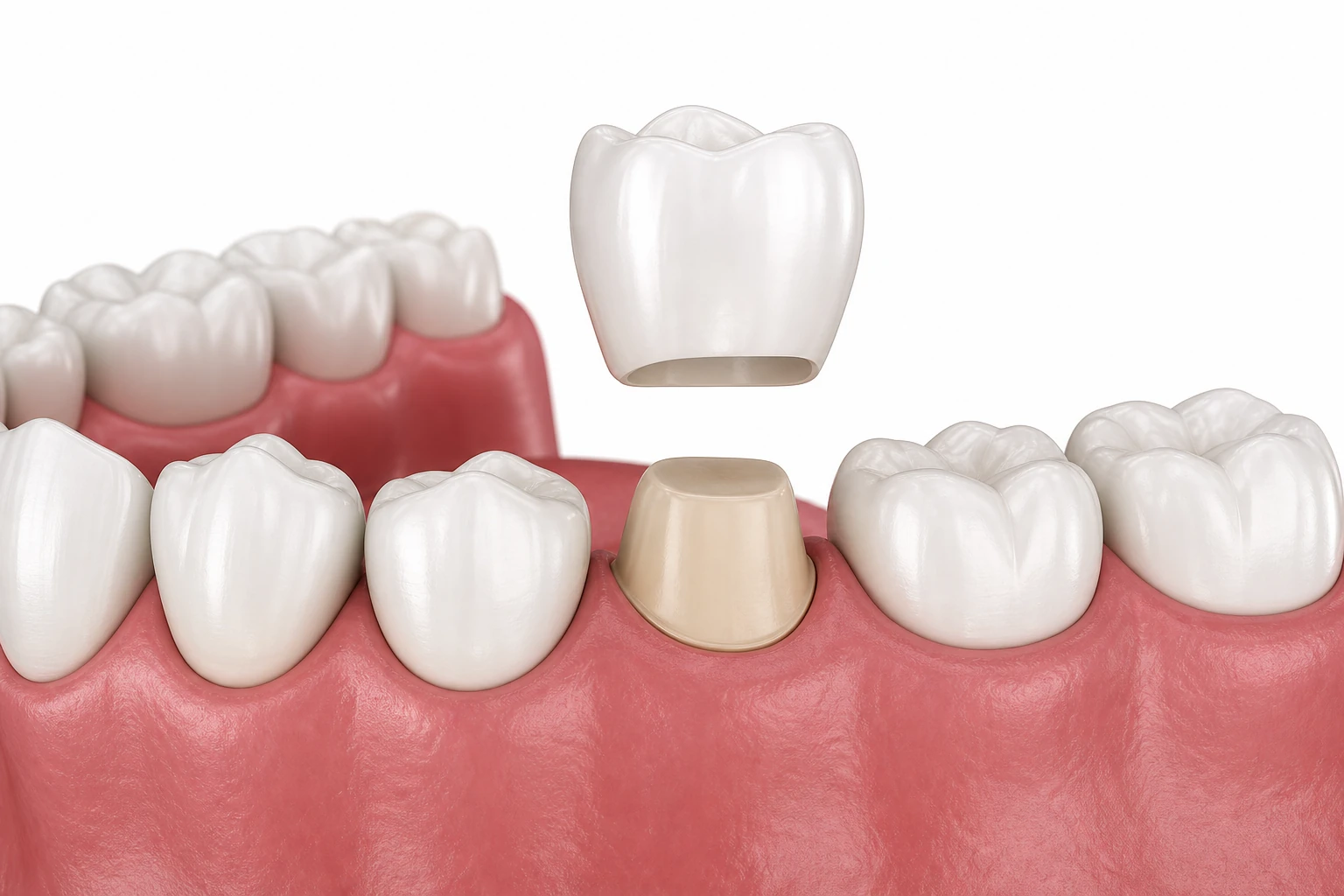
A crown visit typically includes shaping the tooth, taking a digital or physical impression, placing a temporary if needed, and seating the final crown after fit and bite checks.
Symptoms, options, and cost factors.
Dental treatment is not one-size-fits-all. Your final recommendation depends on exam findings, X-rays, gum health, bite, medical history, and your priorities.
Cost/insurance/financing: Cost varies by material, buildup needs, and insurance coverage. PPO plans may cover part of a crown when medically necessary.
Important note: A crown protects a tooth but does not make it immune to cavities or gum disease; cleaning and checkups still matter.
- Cracked or broken tooth
- Large filling with little tooth structure left
- Tooth after root canal treatment
- Worn or misshapen tooth
- Biting pain from a structural fracture
- Porcelain or zirconia crown options
- Core buildup when tooth structure is missing
- Temporary crown during fabrication when needed
- Replacement of old crowns if decay, leakage, or poor fit is present
Related dental services.
Explore related Doctor Dental services that may be part of your treatment plan.
Dental Crown FAQs
1. What is a dental crown?
A dental crown is a custom-made restoration that covers and protects a damaged or weakened tooth.
Crowns are commonly used when a tooth has a large filling, significant decay, a fracture, or has been weakened by root canal treatment. A crown helps restore the tooth’s shape, strength, appearance, and ability to function normally.
2. How do I know if I need a dental crown?
A dental crown may be recommended if a tooth is cracked, badly worn, heavily filled, weakened by decay, or has lost a significant amount of tooth structure.
Crowns are also commonly placed after root canal treatment on back teeth and may be used to improve the appearance or shape of certain teeth.
A dental examination and X-rays can help determine whether a crown is the best option or whether a filling or other restoration may be appropriate.
3. How much does a dental crown cost?
The cost of a dental crown depends on several factors, including the type of crown, the tooth being treated, the amount of preparation needed, and the patient’s dental insurance coverage.
Additional treatment such as a buildup or root canal may also affect the total cost.
A dental examination is typically needed before an accurate treatment estimate can be provided.
4. Does getting a dental crown hurt?
Dental crown treatment is generally performed with local anesthesia, so patients should not feel pain while the tooth is being prepared.
After the appointment, the tooth or surrounding gums may feel mildly sensitive or sore for a short period.
If a tooth is severely inflamed or infected, additional treatment such as a root canal may sometimes be necessary before or after the crown is placed.
5. How long does a dental crown last?
Dental crowns commonly last many years, and some can remain functional for 10 to 15 years or longer with proper care.
The lifespan of a crown depends on oral hygiene, bite forces, tooth grinding, diet, the amount of healthy tooth structure remaining, and regular dental care.
Avoiding habits such as chewing ice or using teeth to open packages can help reduce the risk of damaging a crown.
6. What are dental crowns made from?
Dental crowns can be made from several materials, including porcelain, ceramic, zirconia, metal alloys, or combinations of these materials.
The best material depends on the location of the tooth, how much chewing force it receives, cosmetic goals, and the patient’s individual needs.
Tooth-colored materials such as ceramic and zirconia are commonly used because they can provide both strength and a natural appearance.
7. What is the difference between a crown and a filling?
A filling repairs a smaller damaged area of a tooth, while a crown covers most or all of the visible portion of the tooth.
Fillings are often appropriate when enough healthy tooth structure remains to support them.
A crown may be recommended when a tooth is too weak or too extensively damaged to be predictably restored with a filling alone.
8. Do I need a crown after a root canal?
Many teeth require a crown after root canal treatment, particularly molars and premolars.
These teeth often have significant loss of tooth structure from decay, previous fillings, or the access needed for root canal treatment. A crown helps protect the weakened tooth from cracking or breaking under normal chewing forces.
Some front teeth may not require a crown if enough healthy tooth structure remains.
9. Can a cracked tooth be fixed with a crown?
In many cases, a dental crown can protect and restore a cracked tooth.
However, the success of treatment depends on the depth and location of the crack. If the crack extends deeply below the gum line or into the root, the tooth may not be able to be saved.
An examination can help determine whether the tooth can be restored with a crown or whether another treatment is necessary.
10. What happens if I delay getting a recommended crown?
Delaying a crown can increase the risk that a weakened tooth will crack, break, or develop additional decay.
A tooth that could have been restored with a crown may become more difficult to save if a large fracture occurs.
In some cases, delaying treatment can lead to the need for root canal therapy or extraction.
11. What should I do if my crown falls off?
If a crown falls off, avoid chewing on the affected tooth and contact your dentist as soon as possible.
Do not use household glue to reattach the crown.
If you still have the crown, keep it and bring it to your appointment. Depending on the condition of the tooth and crown, the dentist may be able to recement it or may recommend a replacement.
12. Can you get a cavity under a dental crown?
Yes. A tooth underneath a crown can still develop decay, especially near the edge where the crown meets the natural tooth.
Good brushing, flossing, and regular dental checkups are important for protecting the tooth underneath the crown.
Decay under a crown may require replacement of the crown and, in more advanced cases, additional treatment such as a root canal.
How do I schedule dental crowns in Tujunga, CA?
Call Doctor Dental at 818-352-0707 or request an appointment through the contact page. The office is located at 6501 Foothill Blvd, Suite 101, Tujunga, CA 91042.
Does Doctor Dental accept insurance for dental crowns?
Doctor Dental accepts all major PPO dental insurances and Denti-Cal. Coverage depends on your plan and the recommended treatment.
Is financing available for dental crowns?
Yes. Financing may be available through Sunbit, Cherry, and CareCredit, including up to 24 months of 0% financing for eligible patients.
Dental Crowns in Tujunga, CA
Dental crowns can help restore damaged, cracked, heavily filled, or weakened teeth while improving function and appearance.
At Doctor Dental in Tujunga, we evaluate damaged teeth and help determine whether a crown, filling, root canal, or another treatment option is most appropriate.
We serve patients from Tujunga, Sunland, La Crescenta, La Cañada Flintridge, and surrounding communities.
If you have a broken tooth, a large filling, tooth sensitivity, or have been told that you need a crown, an examination can help determine the best way to protect the tooth.
Doctor Dental
6501 Foothill Blvd, Suite 101
Tujunga, CA 91042
(818) 352-0707
Explore more services.
Doctor Dental provides preventive, emergency, restorative, cosmetic, implant, and family dentistry.
Need dental crowns?
Call Doctor Dental for appointments, questions, and emergency availability in Tujunga, CA.