
Dental Bridges in Tujunga.
Dental bridges in Tujunga, CA for replacing one or more missing teeth with a fixed, natural-looking restoration supported by nearby teeth or dental implants.
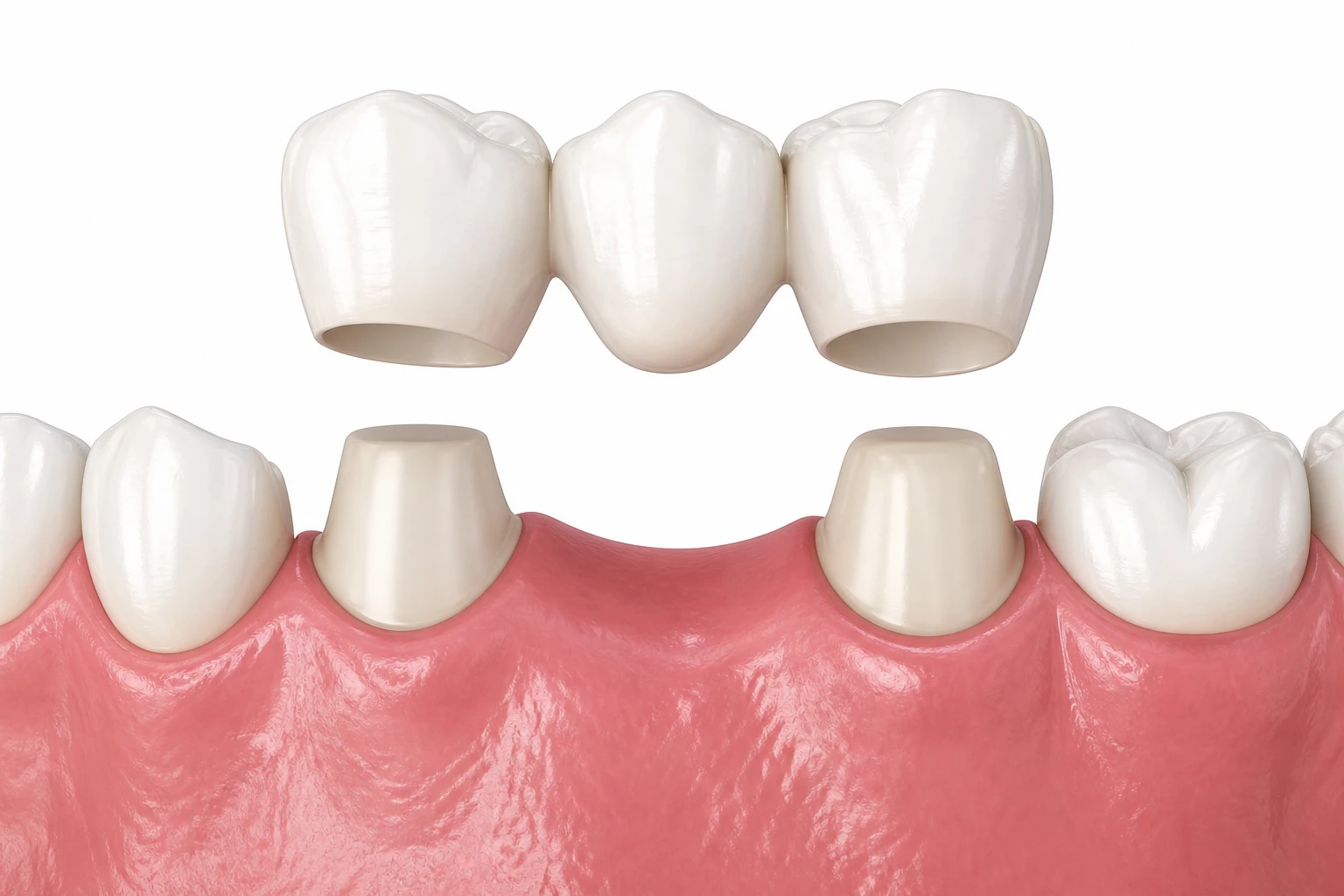
Is dental bridges right for you?
Doctor Dental helps patients searching for dental bridges in Tujunga, CA understand symptoms, options, insurance, financing, and the best next step.
Common reasons
- Missing tooth or teeth
- Difficulty chewing due to gaps
- Want a non-removable replacement option
Benefits
- Fixed replacement option
- Restores smile shape
- Helps improve chewing
What to expect
The Doctor Dental team reviews your concerns, checks your teeth and gums, and explains recommended care before treatment begins.
Comfortable care, modern presentation.
Doctor Dental is designed to make dental visits easier to understand — with friendly communication, flexible payment options, and comprehensive services under one roof.
Call (818) 352-07076501 Foothill Blvd, Suite 101, Tujunga, CA 91042
All major PPO dental insurances and Denti-Cal.
Sunbit, Cherry, and CareCredit options may be available up to 24 months at 0%.
Dental Bridges: patient questions answered.
More detail for patients comparing dental bridges in Tujunga, CA — including symptoms, options, cost factors, insurance, financing, and what to expect.
What it is
Dental Bridges is planned around your diagnosis, comfort, oral health, and long-term goals. Doctor Dental explains why treatment may be recommended and what alternatives may exist.
Who may need it
Patients missing one or more teeth who want a fixed replacement and may not choose implants may benefit from an exam and a personalized recommendation.
What to expect
Bridge planning includes checking the supporting teeth, gums, bite, and space. The teeth next to the gap may need crowns to support the bridge.
Symptoms, options, and cost factors.
Dental treatment is not one-size-fits-all. Your final recommendation depends on exam findings, X-rays, gum health, bite, medical history, and your priorities.
Cost/insurance/financing: Bridge cost depends on number of teeth replaced, materials, and supporting tooth needs. Insurance may help when criteria are met.
Important note: If supporting teeth are weak or gum health is poor, implants or another option may be safer.
- Gap from a missing tooth
- Difficulty chewing on one side
- Teeth shifting toward an empty space
- Desire for a non-removable replacement
- Cosmetic concern from missing teeth
- Traditional fixed bridge
- Implant-supported bridge when appropriate
- Temporary bridge during fabrication
- Comparison with dental implants or partial dentures
Related dental services.
Explore related Doctor Dental services that may be part of your treatment plan.
Dental Crowns & Bridges FAQ.
Answers to common questions about dental crowns and bridges at Doctor Dental in Tujunga, CA.
How do I know if I need a dental crown?
A crown may be recommended when a tooth is cracked, badly worn, weakened by a large filling, significantly decayed, or treated with a root canal. Crowns can also restore a tooth that cannot be predictably repaired with a filling or bonding alone. An examination and X-rays are needed to determine whether a crown is the most conservative option.
How much does a dental crown cost?
The cost varies with the crown material, the tooth being treated, laboratory and design needs, and whether a buildup, root canal, or other treatment is required first. Dental insurance may cover part of a medically necessary crown depending on the plan. Doctor Dental can provide a personalized treatment plan and written estimate after an examination.
How long does a dental crown last?
A well-made crown often lasts 10 to 15 years or longer, but its lifespan depends on oral hygiene, bite forces, grinding or clenching, diet, and the health of the tooth underneath. Regular examinations and cleanings help identify problems early. A night guard may be recommended for patients who grind their teeth.
Is getting a crown painful?
The tooth is typically numbed with local anesthetic, so you may feel pressure but should not feel sharp pain during preparation. Mild gum soreness or temperature sensitivity can occur afterward and usually improves. Persistent or worsening pain should be reported so the bite, tooth, and surrounding tissues can be checked.
Can a broken tooth be repaired without a crown?
Sometimes. A small chip or limited area of damage may be repaired with bonding, a filling, an inlay, or an onlay. If a large portion of the tooth is missing, the remaining walls are weak, or the crack threatens the tooth, a crown may provide more reliable protection. The safest option depends on how much healthy tooth structure remains.
What is the difference between a crown and a filling?
A filling replaces a smaller area of damaged or decayed tooth structure. A crown covers most or all of the visible tooth to reinforce it when a filling would not provide enough strength. Crowns generally require more preparation and laboratory work, but they can protect teeth with extensive damage or large existing fillings.
What is the difference between a dental bridge and an implant?
A traditional bridge replaces a missing tooth by attaching to crowns on the neighboring teeth. A dental implant is placed in the jawbone and supports a replacement tooth without relying on adjacent teeth. The better option depends on bone and gum health, the condition of nearby teeth, treatment time, surgery preferences, cost, and long-term goals.
How long does a dental bridge last?
A dental bridge often lasts 10 to 15 years or longer with good care. Its lifespan depends on the health of the supporting teeth, daily cleaning under the bridge, bite forces, diet, and regular dental visits. Decay or gum disease around a supporting tooth can shorten the life of the entire bridge.
Can a crown be placed after a root canal?
Yes. A crown is commonly recommended after root canal treatment, especially on back teeth that handle strong chewing forces. Removing infected tissue and existing decay can leave the tooth more vulnerable to fracture, and a crown helps restore strength and function. The exact recommendation depends on the tooth and how much structure remains.
What happens if I wait too long to get a crown?
A weakened or cracked tooth may lose more structure, split, develop deeper decay, become painful, or become infected while treatment is delayed. A tooth that could have been protected with a crown may eventually need root canal treatment or extraction. If a crown has been recommended, ask how urgent it is and what warning signs require prompt care.
Explore more services.
Doctor Dental provides preventive, emergency, restorative, cosmetic, implant, and family dentistry.
Need dental bridges?
Call Doctor Dental for appointments, questions, and emergency availability in Tujunga, CA.